

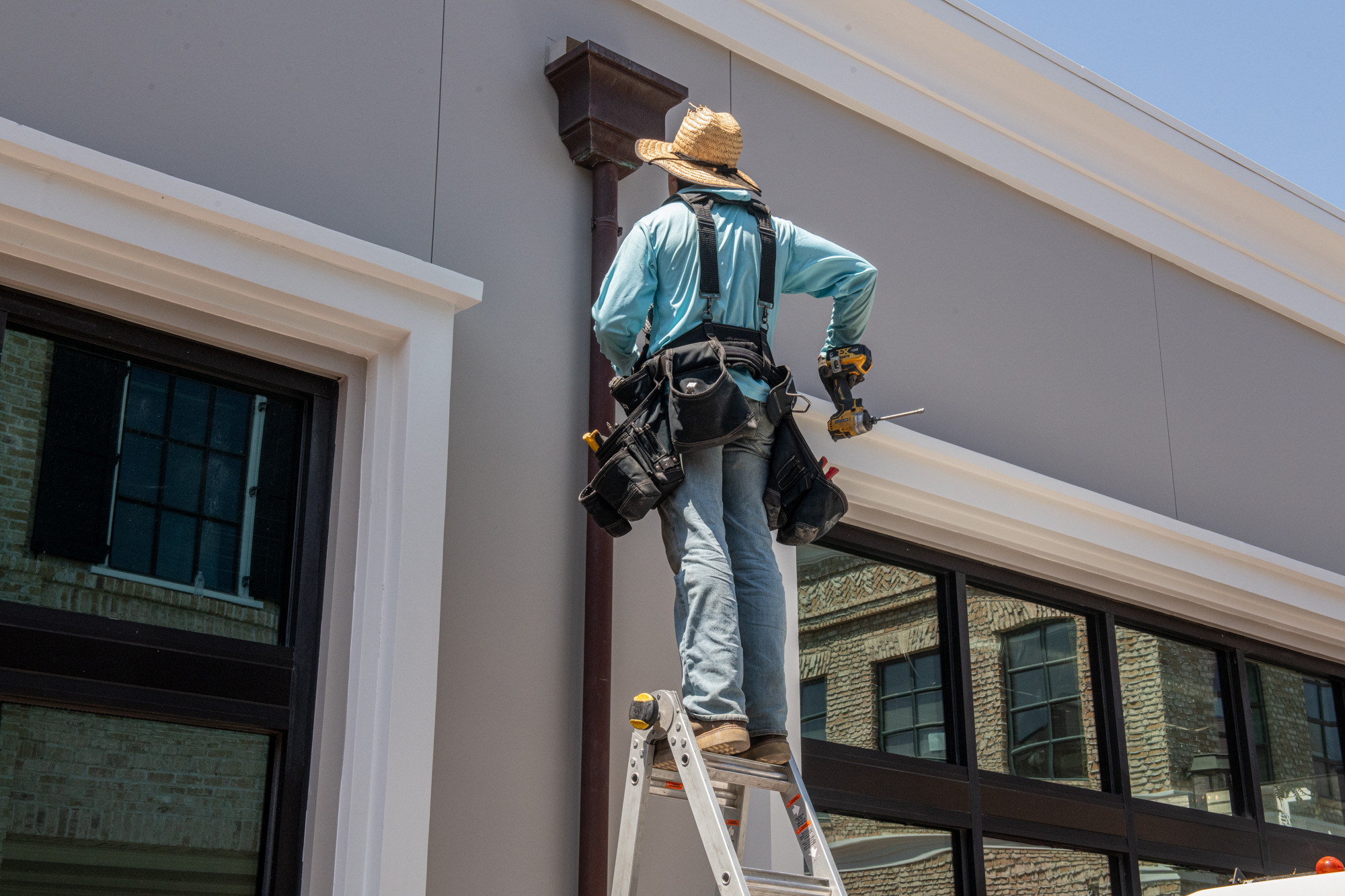
For most Los Angeles homes, the honest answer is twice a year: once in late spring after the bloom and seed drop, and once in fall before the first rains arrive. But that baseline shifts fast. If your roof sits under oak, pine, sycamore, or jacaranda, or your property falls inside a designated fire zone, three to four cleanings a year is closer to right. The goal was never a number on the calendar. It’s gutters that stay clear when LA’s weather actually tests them.
Why “Twice A Year” Needs An LA-Sized Asterisk
Most gutter-cleaning advice was written for places with four distinct seasons and steady rainfall.
Los Angeles doesn’t play by those rules. We get long, bone-dry stretches followed by a concentrated wet season, plus a tree mix and fire risk that change the math house by house.
So while twice a year is the right starting point, the smarter way to think about gutter cleaning frequency here is by trigger (what’s actually landing in your gutters and when the next storm is coming) rather than a fixed date. Here’s how that breaks down across the LA calendar.
The LA Gutter Calendar
Late Spring and Summer: Quiet Buildup
It’s easy to assume dry months mean clean gutters. They don’t. Spring brings a heavy drop of seeds, pollen, blossoms, and jacaranda blooms, and summer adds dust, roof grit, and the occasional palm frond. None of it gets rinsed away, because there’s almost no rain to move it along. Instead it bakes into a dense mat at the bottom of the channel.
A late-spring cleaning clears that bloom-and-seed layer before it hardens. If you’re under significant tree cover, a quick mid-summer check is worth the ladder trip. What looks empty from the ground is often half-full up top.
Fall: The Real Debris Season
Los Angeles doesn’t get a dramatic New England leaf drop, but our trees shed steadily through fall, and evergreens like pine and eucalyptus shed year-round. This is when gutters fill fastest.
Add Santa Ana winds, which can pack a season’s worth of leaves and twigs into your downspouts in a single gusty afternoon, and fall becomes the most important cleaning window of the year.
Before the First Rains: the Non-Negotiable One
If you only commit to one cleaning, make it this one. LA’s rainy season typically runs late fall through early spring, and the first real storm is the worst time to discover your gutters are packed. Clogged gutters overflow against the fascia, send water down the exterior walls, and let it pool near the foundation, which is exactly the damage gutters exist to prevent. Clearing them before the first rains means the system can actually do its job when the wet months hit.
When to Clean Gutters in California’s Fire Zones
If your home is in or near a Very High Fire Hazard Severity Zone, common across the foothills, canyons, and hillside neighborhoods around LA, dry debris in your gutters is more than a clog risk. Dead leaves and pine needles are ready-made fuel for windblown embers, which are responsible for a large share of homes lost in wildfires.
In these areas, gutters should be kept clear through the entire dry season, not just cleaned on a twice-a-year schedule. That often means three or four cleanings a year, and metal gutter guards are worth a serious look. For a fuller picture of protecting your home’s exterior, The Brothers’ fire hardening services walk through how gutters fit into a broader defensible-space strategy.
Signs You’re Overdue (Regardless of the Calendar)
Dates are a guide, not a guarantee. Get up for a look, or call a pro, if you notice water spilling over the gutter edge during rain, visible plants or seedlings sprouting from the channel, sagging or pulling-away sections, staining or peeling paint on the fascia below, or birds and pests treating your gutters like a nest. Any one of these means the debris has been sitting too long.
A Simple Rule of Thumb
If you want one line to remember: clean before the rains, clean after the heaviest leaf drop, and add a cleaning for every layer of risk: dense tree cover, a fire zone, or a roofline that traps debris. Most homes land at two cleanings a year; plenty of LA homes genuinely need three or four.
When you’d rather skip the ladder altogether, professional gutter cleaning clears both the gutters and the downspouts by hand and includes an inspection that catches small problems before the rain finds them. For a month-by-month look at keeping your whole gutter system healthy through every LA season, see our season-by-season gutter care guide.
Frequently Asked Questions
How often should you clean gutters in Los Angeles? Twice a year is the baseline: once in late spring and once in fall before the rainy season. Homes under heavy tree cover or in fire zones often need three to four cleanings a year.
When is the best time to clean gutters in California? The two most important windows are after the fall leaf drop and just before the first winter rains. A late-spring cleaning to clear bloom and seed buildup is a strong third.
Do I really need to clean my gutters if it barely rains? Yes. Dry months still fill gutters with seeds, pollen, dust, and leaves. Because there’s little rain to flush it, debris compacts and hardens, and in fire zones, that dry material is a real ember hazard.
Can gutter guards reduce how often I clean? Yes. Quality gutter guards keep most leaves and debris out, which significantly cuts how often interior cleaning is needed. In LA, the material matters: an all-metal guard like BroGuard is non-combustible and ember-resistant and meets California’s wildfire safety standards, so it keeps debris out year-round without adding fuel at the roofline the way plastic or nylon guards can. Guards don’t eliminate maintenance entirely, but they make it far less frequent.
Ready to Get Your Gutters LA-Ready?
Whether you’re due for a seasonal clean or want a system that holds up through fire season and the winter rains, The Brothers That Just Do Gutters can help. Request a free estimate and get your gutters ready before the next storm.
Keep reading
More gutter advice for Los Angeles homes
 From Roof to Foundation: How Your Gutters Quietly Protect Your Whole Home
 A Year of Gutter Care in LA: A Season-by-Season Maintenance Guide
 Cleaning vs. Guards: The Real Math on Keeping Your Gutters Clear
Water damage in Greater Los Angeles
The most expensive thing on your house is the part nobody looks at
Gutters are not decoration. They are the drainage system that decides whether 14 inches of rain a year leaves your roof and goes to the street, or runs down your siding and sits against your foundation. When a gutter in Los Angeles stops moving water, the damage does not announce itself. It starts behind the fascia, under the first course of siding, and in the soil at the corner of the house.
,
Average paid homeowners claim for water damage and freezing
Insurance Information Institute, average losses 2018 to 2022
1 in
Insured homes that file a water damage or freezing claim in a single year
Insurance Information Institute, 1.61 claims per 100 insured homes
,
Gallons an 1,800 square foot roof sheds in one Los Angeles year
14 inches of annual rainfall at 0.62 gallons per inch per square foot
Where the water actually goes
Tap a point on the wall section.
01
Fascia and soffit
the board the gutter is screwed to
Water backs up behind a packed trough and sits against the fascia board. That board is wood, it is painted on one side only, and it is the thing holding your gutter to the house.
The tell. Paint blistering under the gutter line, or a gutter that has started to pull away at one end.
02
Siding and paint
the wall below the overflow
Overflow does not fall clear of the house. It sheets down the wall, gets behind the siding at the laps, and stays there long enough to swell the board and lift the paint.
The tell. A vertical stripe of clean or discolored siding under one section of gutter.
03
Foundation and crawlspace
the soil at the base of the wall
A downspout exists to carry water away from the house. When the trough above it is blocked, that water lands at the base of the wall instead, and saturated soil moves.
The tell. Soil dug out below the roofline, a downspout that stays dry in rain, or a damp crawlspace.
04
Behind finished walls
the inside face of the same wall
By the time water shows up on a wall inside, it has usually been arriving for two or three seasons. This is the point where a gutter problem becomes a drywall and framing problem.
The tell. A musty smell in one room, or a stain that keeps coming back after you paint over it.
When the water arrives in Los Angeles
14 inches a year, and almost none of it evenly.
Typical fall rain
~2 in
What lands up there
Jacaranda and ficus litter, palm fiber, dust and ash
Overflow risk
Moderate
Typical winter rain
~9 in
What lands up there
Almost the whole year of rain lands in this window
Overflow risk
Severe
Typical spring rain
~2 in
What lands up there
Tail-end storms on a system that has taken the winter
Overflow risk
Moderate
Typical summer rain
~1 in
What lands up there
Dry litter and ash packing down in the trough
Overflow risk
Low
Season totals are typical averages for Greater Los Angeles. Your street, your trees and your roof pitch decide the rest.
Usually covered
A pipe that bursts tonight. A storm that tears a section off. Something sudden, accidental and datable.
Usually not covered
A gutter that has been overflowing onto the same corner of your foundation for three winters. Insurers call that gradual, or a maintenance failure, and gradual does not get paid.
What actually prevents it
How often should gutters be cleaned in Los Angeles?
For most Los Angeles homes, twice a year, with the heavier visit timed before the first real storm after the dry stretch. Months of dust and ash bake into the trough, and the first rain turns that into a dam.
Do gutter guards actually stop water damage?
Guards do not stop water. They stop the debris that stops water. BroGuard uses fine metal mesh, sized for dry litter, palm fiber and ash rather than heavy leaf fall, which keeps the trough clear so the system can do the job it was sized for. That is what protects the fascia, the siding and the foundation.
Is it worth replacing gutters instead of repairing them?
If the runs are sagging, seam-split or undersized for the roof, repairs buy a season. Seamless gutters are formed on site to the exact length of your roofline, so there are no factory seams in the middle of a run to split later. We will tell you honestly which one your house needs.
How do I know if my gutters are already failing?
Look for staining down the fascia, water marks on the siding under a joint, soil that has been dug out below the roofline, and a downspout that stays dry during rain. Any one of those means water is leaving the system somewhere it should not.
A gutter check costs nothing. The other thing costs $13,954.
We will look at your roofline, tell you what it needs in writing, and leave. Serving Los Angeles, Hollywood, Sherman Oaks, Encino and Culver City and the surrounding areas.
We Know Rain Gutters
When designing and installing gutters on your property, keep the roofline, pitch, overhang, fascia, and valleys in mind. Our Solutionists will assess your home and recommend the best seamless gutter installation or gutter replacement option based on your individual requirements. Using cutting-edge technology and high-quality materials, we design your one-of-a-kind gutter system.
Your home is a personal investment.
We offer personal solutions for your home. Our professional gutter solutions expert will look at your situation to propose the best gutter consideration. Our professionals are ready to create a custom gutter system for your home.
Join the Team!
See Open Positions
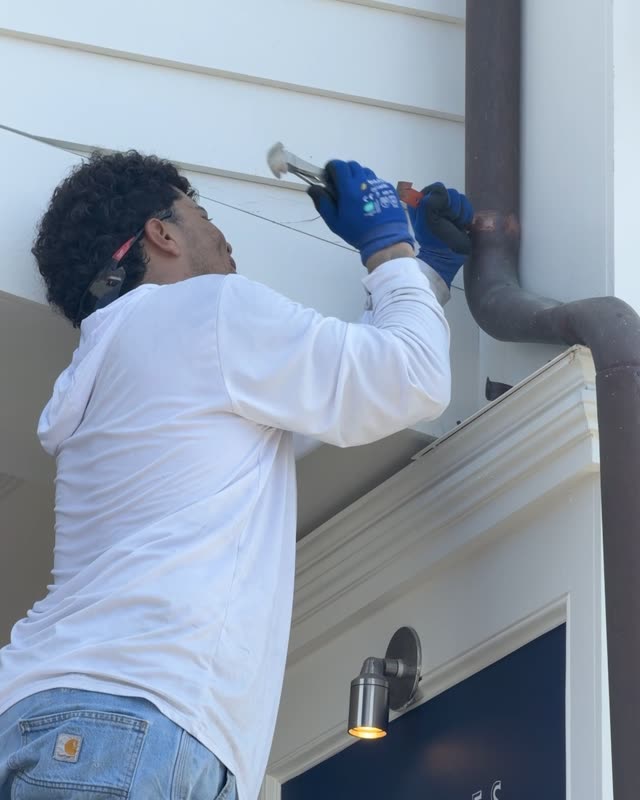
Los Angeles gutter work, posted as it happens
@brothersgutters.laJob days across the Westside, the Valley and the Hollywood Hills, straight from the crew that shows up.
 Sep 7View on Instagram
 Aug 28View on Instagram
 Aug 26View on Instagram
 Aug 24View on Instagram
 Aug 21View on Instagram
 Aug 19View on Instagram
A look at recent posts. Tap any tile to see the full feed on Instagram.
The storms are coming.
Beat them to your gutters.
NOAA has an El Niño Advisory in effect for this winter, and every LA agency is asking homeowners to clear gutters first. When the rain hits, clogged or aging gutters are the first thing to push water toward your roof, walls, and foundation. Get a free gutter check now, and go into the season protected, not scrambling in the downpour.
Licensed, Bonded & Insured · California Contractor License #1140218
♿
Bigger Text
Biggest Text
Text Spacing
Readable Font
Highlight Links
Highlight Titles
Big Cursor
High Contrast
Invert Colors
Grayscale
Pause Motion
Licensed, Bonded & Insured · California Contractor License #1140218