

Author: robinson

Cleaning vs. Guards: The Real Math on Keeping Your Gutters Clear

Every homeowner with gutters eventually asks the same question: do I just keep cleaning these, or do I install guards and be done with it? It’s a fair question, and the answer isn’t the same for every house. So let’s skip the sales pitch and actually do the math, then talk honestly about where guards make sense and where they don’t.

The short version: are gutter guards worth it? For many Los Angeles homes, especially those under heavy tree cover or in fire-exposed areas, the long-run numbers favor a quality guard system. But not for every roof, and not in every situation. Here’s how to think it through.

The Recurring Cost of Cleaning

Cleaning is the lower-commitment path. You pay as you go, there’s no large upfront cost, and a good cleaning keeps the system working exactly as designed.

The catch is that cleaning is never a one-time expense. Most LA homes need it at least twice a year, and homes under oak, pine, or jacaranda often need three or four visits. (For the full breakdown of how often your home actually needs it, see our guide on how often you should really clean your gutters in Los Angeles.) Those visits add up, year after year, for as long as you own the house.

The One-Time Cost of Guards

Guards flip the equation. You pay more upfront for the system and installation, and in return you sharply reduce, though rarely eliminate, the ongoing cleaning. A quality guard keeps leaves and debris out of the channel, so the recurring expense and the twice-a-year ladder work largely go away.

The question is simply whether the upfront cost is worth what you stop spending over time. That depends on your house, your trees, and how long you plan to stay.

The Real Math, Side by Side

Here’s a simplified comparison to show how the two paths cross over time. The figures below are illustrative ranges to demonstrate the math, not a quote. Actual pricing depends on your home’s size, roofline, gutter footage, and tree exposure, so treat these as a model rather than a price list.

Ongoing Cleaning

  • Upfront cost: Low or none
  • Typical annual cost: Roughly $300 to $600 a year for two cleanings, and more with heavy tree cover
  • Cost over about five years: Roughly $1,500 to $3,000 or more
  • Ladder work and hassle: Recurring, a few times a year
  • Fire-season debris control: Only as good as your last cleaning

Quality Guard System

  • Upfront cost: A higher one-time install
  • Typical annual cost: Minimal after install
  • Cost over about five years: A single one-time install, often landing in a similar range
  • Ladder work and hassle: Rare
  • Fire-season debris control: Continuous, with debris kept out year-round

The pattern most homes see: cleaning is cheaper in year one, but the recurring cost keeps climbing while a guard system is mostly a fixed, one-time number. Somewhere in the first several years, the lines tend to cross, and the heavier your tree cover, the faster that happens. A home that needs four cleanings a year reaches the crossover point much sooner than one that needs two.

Why the Material Matters in Los Angeles

If you decide guards make sense, the next question is what they’re made of, and in LA this is where it stops being only about convenience.

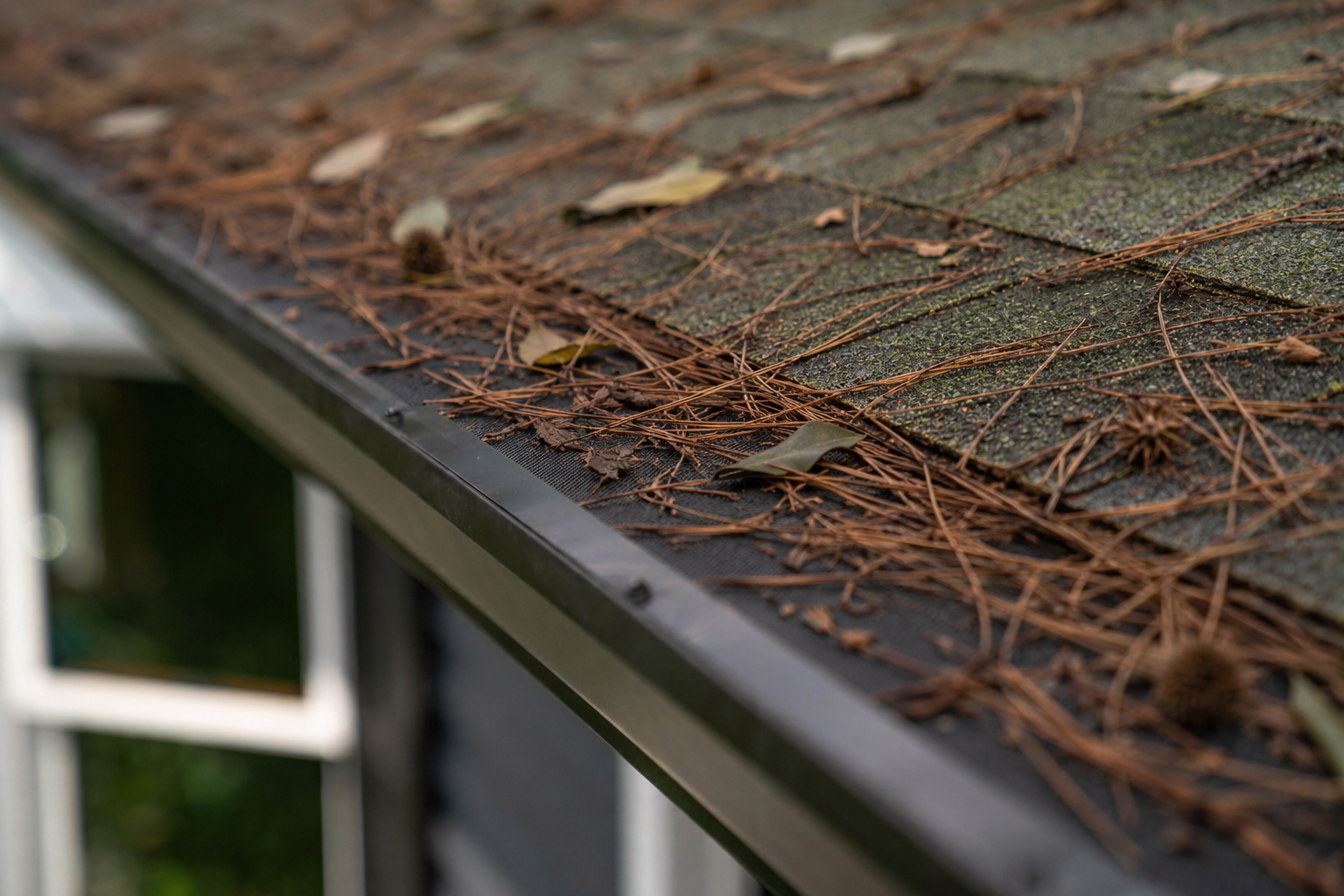
The most common budget option is plastic or nylon mesh, found in popular products like LeafFilter. It keeps leaves out reasonably well and costs less, but it has two real weaknesses in this climate. Years of intense sun make plastic brittle, so it warps, sags, and cracks over time. And in an ember-exposed area, a guard that contains combustible plastic sitting on your roofline is the opposite of what you want.

That second point is the one that matters most here, and it isn’t just a matter of preference. Under California’s Wildland-Urban Interface building standards (Chapter 7A), gutters and gutter guards in high-fire-risk zones are required to be made of noncombustible material, and guards containing plastic or nylon don’t meet that bar. Insurers in these areas increasingly expect the same. Windblown embers are a leading cause of home loss, and they seek out any combustible material at the roof edge to take hold. 

An all-metal guard like BroGuard is built to meet those state standards: metal won’t degrade under UV the way plastic does, and it won’t add fuel at the most vulnerable part of the structure. When you’re comparing metal gutter guards vs mesh in a fire-prone region, that difference is less about preference and more about code and risk.

Do Gutter Guards Work? Yes, with Honest Caveats

It’s worth being straight about this: guards are not magic, and they are not right for every roof.

A few things to keep in mind:

  • No guard is fully maintenance-free. Fine grit, shingle particles, and pollen can still settle on top, and downspouts should be checked periodically. Guards reduce cleaning dramatically; they don’t erase it entirely.
  • Installation quality matters more than the product. A great guard installed poorly, or fitted to gutters that are already sagging or undersized, won’t perform. Sometimes the right first step is repair, not guards. It’s also worth knowing that when new gutters are the right call, our workmanship warranty runs five years on new gutters alone and ten years when they’re installed together with BroGuard.
  • Some roofs aren’t good candidates. Certain pitches, gutter styles, or low-debris environments may not justify the upfront cost. If your home barely collects debris, ongoing cleaning may simply be the smarter spend.

A reputable installer should tell you when guards aren’t the right call. If your gutters mainly need attention a couple of times a year and there’s little tree cover, a straightforward cleaning routine may be all you ever need.

So, What’s Right for Your Home?

Run the math against your own situation. If you’re under heavy tree cover, in a fire-exposed area, planning to stay in the home for years, or simply tired of the recurring ladder work, guards usually win on both cost and safety over time. If your debris load is light and your gutters are in good shape, cleaning may be the more sensible choice.

The honest answer comes down to your specific roof, and that’s worth a real look rather than a guess. If you want the actual numbers for your home, request a free quote on gutter guards and we’ll walk you through the comparison, no pressure either way.
Why Summer Is the Smartest Time to Service Your Gutters

Most people think about their gutters for the first time in the middle of a downpour, water spilling over the edge, a clog they can’t reach, and every gutter company in town booked solid. It’s the worst possible moment to need help, and it’s entirely avoidable.

Here’s the case for getting ahead of it: the best time to clean gutters in Los Angeles isn’t when the rain arrives. It’s now, in the dry, calm stretch of summer, when the work is simpler, the scheduling is relaxed, and you’re fixing problems on your terms instead of the weather’s.

Dry Months Mean Calm Scheduling, not a Storm-Season Scramble

When the first real storm hits, two things happen at once. Every clogged gutter in the city reveals itself on the same afternoon, and everyone calls at the same time. Lead times stretch, the calendar fills, and the urgent jobs go to whoever booked first.

Summer flips all of that in your favor:

  • Open scheduling. You pick a date that works for you instead of waiting out a backlog while water pools by your foundation.
  • Cleaner, safer work. Dry debris is lighter and easier to clear than the soaked, heavy sludge that sits in gutters mid-storm, and dry footing makes the whole job safer.
  • Time to fix what’s found. If an inspection turns up a sagging run or a worn seam, there’s room to repair it properly before it matters, not patch it in a panic.

This is what good summer gutter maintenance really buys you: the chance to handle everything once, calmly, before the season that actually tests your gutters begins.

Get Ahead of the Rainy Season While the System is Empty

There’s a practical reason summer beats fall for this work. Gutter maintenance before the rainy season is only useful if it lasts, and a gutter you clear in summer has the dry months to stay clear before the heavy debris and first rains arrive.

Clear gutters going into the wet season do exactly what they’re built to do: carry water off the roof and away from the house, instead of overflowing against the fascia, down the siding, and into the soil around your foundation. Doing it early means the system is ready and proven before you’re depending on it. For a fuller breakdown of how often to clean and when, our guide on how often you should really clean your gutters in Los Angeles walks through the full seasonal picture.

The Fire-Season Angle: Dry Debris is Fuel

In Los Angeles, summer gutter care isn’t only about the rain that’s coming. It’s about the fire risk that’s already here.

If your home sits in or near a Wildland-Urban Interface (WUI) zone, the dry leaves, pine needles, and twigs collecting in your gutters are not just a clog waiting to happen. They’re fuel. 

Windblown embers, which travel well ahead of a fire front and account for a large share of homes lost in wildfires, only need a dry, sheltered bed of debris to take hold. A gutter full of sun-baked leaves on your roofline is exactly that.

This is what makes fire season gutter cleaning in Los Angeles a genuine safety task, not just maintenance. Keeping gutters clear through the dry months removes one of the easiest ignition points on the entire house, right at the most vulnerable part of the structure.

Clear Once, Stay Protected: Where BroGuard Comes In

If clearing your gutters several times across a long fire season sounds like a lot, that’s the honest reality of an open gutter under heavy tree cover. It’s also the reason gutter guards make so much sense here.

A quality guard system like BroGuard keeps leaves and debris out of the channel in the first place, so there’s far less dry fuel to collect and far less interior cleaning to keep up with. Just as important in a fire-prone area, BroGuard is all-metal, non-combustible, and ember-resistant, and it meets California’s wildfire safety standards for materials at the roofline, so the guard itself adds no fuel where embers are most likely to land. Going into fire season and then the rains, that means a gutter that stays clear on its own through the months it matters most, instead of one you’re racing to empty between risks.

Summer is the natural time to put a system like this in. You’re already thinking about the gutters, the weather is cooperating, and you head into both fire season and the rainy season already protected.

Book It Now, Before the Rush

The whole point of summer service is timing. Handle it while the months are dry and the calendar is open, and you skip the storm-season scramble entirely.

If your gutters are due, now is the moment to act. Schedule a professional gutter cleaning or ask about BroGuard while there’s room on the calendar. Book your free estimate today and head into the next storm, and the next fire season, already ahead of it.

The Quiet Warning Signs Your Gutters Need Attention

Gutters rarely fail all at once. They give you a long runway of small, easy-to-miss hints first: a faint streak here, a slight lean there, a patch of paint that looks a little off. The trouble is that most of these signs are quiet enough to walk past for months, right up until a storm turns a minor clog into water in your walls.

The good news is that once you know what to look for, the warning signs your gutters need cleaning or repair are easy to spot from the ground. Below are six of the most common, what each one actually means, and what to do about it before it gets expensive.

1. Dark Streaks Running Down the Outside of the Gutter

What it means: Those vertical “tiger stripes” are dirt and debris that overflowed the gutter and dried on the face. They are one of the clearest signs your gutters need cleaning, because they only appear when water has been spilling over the front edge instead of draining through the system.

What to do: Start with a thorough cleaning of the gutters and downspouts. If the streaks come back quickly after a cleaning, the slope or hangers may be off and the system needs a closer look.

2. Gutters Sagging or Pulling Away from the House

What it means: A gutter that dips in the middle or leans away from the fascia is carrying more weight than it should, usually from trapped water and wet debris, or from fasteners that have loosened over time. One frequent culprit is the old spike-and-ferrule method, where a long nail is driven through the gutter into the fascia. Those spikes work loose as the wood expands and contracts, which is why nearly every serious installer has moved away from them over the past decade. Gutters hung this way tend to pull away eventually, no matter how well they were installed. Left alone, the pitch gets worse, water pools, and the whole run can tear loose.

What to do: This is past the point of a simple cleaning. Sagging sections need to be rehung, refastened, or repaired so the gutter sits level and drains properly again. If your gutters were hung with spikes, it is worth having them assessed: when the gutters are still relatively young, we can often salvage them and rehang with hidden hangers, a sturdier bracket that fastens inside the gutter. When the spikes have already done their damage on the way out, replacement is usually the smarter long-term fix. Either way, it is one of the more common gutter problems to look for, and one of the easiest to catch early.

3. Peeling Paint, Rust, or Orange Streaking

What it means: Gutters are built to shed water, so paint that is bubbling or peeling, or metal that is rusting, tells you moisture is sitting where it shouldn’t. On the gutter itself it points to standing water inside the channel. On the siding, fascia, or trim below, it points to chronic overflow soaking the wood and finish.

What to do: Treat it as a signal, not just a cosmetic issue. Have the gutters cleaned and inspected. Rust spots and failing seams are clear signs of gutter damage that tend to spread, so catching them early keeps a small repair from becoming a full replacement.

4. Water Pooling Near the Foundation

What it means: Gutters exist to carry water away from your home. When you see puddles, eroded soil, or splashback against the foundation after it rains, the system is dumping water in exactly the wrong place. That usually traces back to a clog, a downspout that ends too close to the house, or a section draining the wrong direction.

What to do: Clear the gutters and downspouts first, then check that downspouts carry water several feet away from the foundation. Pooling water is worth acting on quickly, since foundation and basement repairs are far costlier than the gutter fix that prevents them.

5. Plants or Seedlings Growing in the Gutter

What it means: If something is sprouting up there, your gutters have collected enough decomposed debris to act like a planter box, and enough standing water to keep it alive. It is a sure sign the system has not drained properly in a long time.

What to do: This calls for a full hand-cleaning of the gutters and downspouts, not just a quick pass with a leaf blower. While the debris is out, it is a good moment to inspect for the rust, sagging, and loose seams that tend to develop underneath all that buildup.

6. You Can’t Remember the Last Time They Were Cleaned

What it means: If it has been more than a year, debris has almost certainly built up out of sight, even if everything looks fine from the curb. Most of the damage on this list starts quietly inside a gutter that nobody has checked in a while.

What to do: Get them inspected and cleaned. For most Los Angeles homes that means at least twice a year, and more often under heavy tree cover or in fire zones. Putting it on a schedule is the simplest way to keep small issues from turning into the bigger ones above.

Do My Gutters Need Repair or Replacement?

Here is the rule of thumb: If the gutters are structurally sound and the problem is debris, overflow, or a section that needs rehanging, you are usually looking at a cleaning or a targeted repair. If you are seeing widespread rust, separated seams, cracking, or sagging along most of the run, replacement often makes more sense than patching the same spots again and again.

The honest answer depends on what is happening up there, and that is hard to judge from the ground. A quick professional inspection will tell you which camp you are in before you spend money either way. If a few of these signs sound familiar, our gutter repair service can diagnose the issue and walk you through the right fix for your home.

Not Sure? We’ll Take a Look, Free.

Most of these warning signs are easy to miss and easy to underestimate, which is exactly why they are worth a second opinion. If you have spotted even one of them, reach out for a free estimate and we’ll tell you honestly whether it’s a simple clean, a quick repair, or nothing to worry about at all.

How Often Should You Really Clean Your Gutters in Los Angeles?

For most Los Angeles homes, the honest answer is twice a year: once in late spring after the bloom and seed drop, and once in fall before the first rains arrive. But that baseline shifts fast. If your roof sits under oak, pine, sycamore, or jacaranda, or your property falls inside a designated fire zone, three to four cleanings a year is closer to right. The goal was never a number on the calendar. It’s gutters that stay clear when LA’s weather actually tests them.

Why “Twice A Year” Needs An LA-Sized Asterisk

Most gutter-cleaning advice was written for places with four distinct seasons and steady rainfall. 

Los Angeles doesn’t play by those rules. We get long, bone-dry stretches followed by a concentrated wet season, plus a tree mix and fire risk that change the math house by house.

So while twice a year is the right starting point, the smarter way to think about gutter cleaning frequency here is by trigger (what’s actually landing in your gutters and when the next storm is coming) rather than a fixed date. Here’s how that breaks down across the LA calendar.

The LA Gutter Calendar

Late Spring and Summer: Quiet Buildup

It’s easy to assume dry months mean clean gutters. They don’t. Spring brings a heavy drop of seeds, pollen, blossoms, and jacaranda blooms, and summer adds dust, roof grit, and the occasional palm frond. None of it gets rinsed away, because there’s almost no rain to move it along. Instead it bakes into a dense mat at the bottom of the channel.

A late-spring cleaning clears that bloom-and-seed layer before it hardens. If you’re under significant tree cover, a quick mid-summer check is worth the ladder trip. What looks empty from the ground is often half-full up top.

Fall: The Real Debris Season

Los Angeles doesn’t get a dramatic New England leaf drop, but our trees shed steadily through fall, and evergreens like pine and eucalyptus shed year-round. This is when gutters fill fastest. 

Add Santa Ana winds, which can pack a season’s worth of leaves and twigs into your downspouts in a single gusty afternoon, and fall becomes the most important cleaning window of the year.

Before the First Rains: the Non-Negotiable One

If you only commit to one cleaning, make it this one. LA’s rainy season typically runs late fall through early spring, and the first real storm is the worst time to discover your gutters are packed. Clogged gutters overflow against the fascia, send water down the exterior walls, and let it pool near the foundation, which is exactly the damage gutters exist to prevent. Clearing them before the first rains means the system can actually do its job when the wet months hit.

When to Clean Gutters in California’s Fire Zones

If your home is in or near a Very High Fire Hazard Severity Zone, common across the foothills, canyons, and hillside neighborhoods around LA, dry debris in your gutters is more than a clog risk. Dead leaves and pine needles are ready-made fuel for windblown embers, which are responsible for a large share of homes lost in wildfires.

In these areas, gutters should be kept clear through the entire dry season, not just cleaned on a twice-a-year schedule. That often means three or four cleanings a year, and metal gutter guards are worth a serious look. For a fuller picture of protecting your home’s exterior, The Brothers’ fire hardening services walk through how gutters fit into a broader defensible-space strategy.

Signs You’re Overdue (Regardless of the Calendar)

Dates are a guide, not a guarantee. Get up for a look, or call a pro, if you notice water spilling over the gutter edge during rain, visible plants or seedlings sprouting from the channel, sagging or pulling-away sections, staining or peeling paint on the fascia below, or birds and pests treating your gutters like a nest. Any one of these means the debris has been sitting too long.

A Simple Rule of Thumb

If you want one line to remember: clean before the rains, clean after the heaviest leaf drop, and add a cleaning for every layer of risk: dense tree cover, a fire zone, or a roofline that traps debris. Most homes land at two cleanings a year; plenty of LA homes genuinely need three or four.

When you’d rather skip the ladder altogether, professional gutter cleaning clears both the gutters and the downspouts by hand and includes an inspection that catches small problems before the rain finds them. For a month-by-month look at keeping your whole gutter system healthy through every LA season, see our season-by-season gutter care guide.

Frequently Asked Questions

How often should you clean gutters in Los Angeles? Twice a year is the baseline: once in late spring and once in fall before the rainy season. Homes under heavy tree cover or in fire zones often need three to four cleanings a year.

When is the best time to clean gutters in California? The two most important windows are after the fall leaf drop and just before the first winter rains. A late-spring cleaning to clear bloom and seed buildup is a strong third.

Do I really need to clean my gutters if it barely rains? Yes. Dry months still fill gutters with seeds, pollen, dust, and leaves. Because there’s little rain to flush it, debris compacts and hardens, and in fire zones, that dry material is a real ember hazard.

Can gutter guards reduce how often I clean? Yes. Quality gutter guards keep most leaves and debris out, which significantly cuts how often interior cleaning is needed. In LA, the material matters: an all-metal guard like BroGuard is non-combustible and ember-resistant and meets California’s wildfire safety standards, so it keeps debris out year-round without adding fuel at the roofline the way plastic or nylon guards can. Guards don’t eliminate maintenance entirely, but they make it far less frequent.

Ready to Get Your Gutters LA-Ready?

Whether you’re due for a seasonal clean or want a system that holds up through fire season and the winter rains, The Brothers that just do Gutters can help. Request a free estimate and get your gutters ready before the next storm.